

EVELYN TAOCHENG WANG: Being Poetic Ruins Life
24 Sep 26 — 06 Nov 26
Exhibition
Venue: Goldsmiths CCA, St James', New Cross
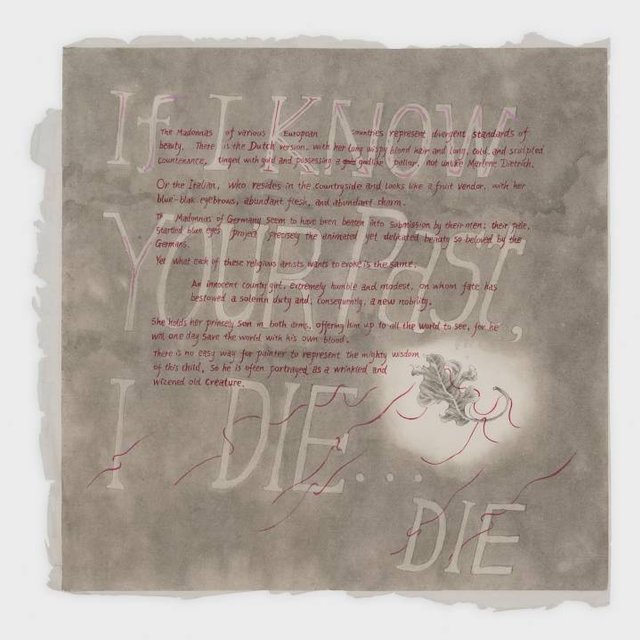
Goldsmiths Centre for Contemporary Art presents Being Poetic Ruins Life, the first UK institutional exhibition by Netherlands-based artist, Evelyn Taocheng Wang.The exhibition, staged across the CCA’s entire building, offers a comprehensive presentation of Wang’s practice to date, bringing together new commissions and significant works across painting, ink on paper, handscrolls, garments, silk paintings, installation, video and text.
Selected through Wang’s ‘make-up box’ approach, a conceptual lens through which she considers Western art history, and her unreliable narrator ‘The Cultural Whore’, works move between fiction, autobiography and cultural projection. Being Poetic Ruins Life assembles an idiosyncratic portrait of Britain shaped by translation, misunderstanding, desire and performance. Wang describes the exhibition as a “layered womb” —a metaphorical architecture and protective space where ideas can be incubated and identities remain fluid.
The exhibition’s title draws on the history of classical Chinese poetry, a literary tradition where exacting demands often consumed the lives of those who mastered it – who were almost exclusively privileged men of status. The title opens questions around gender, power and creative labour, while also playfully interrogating the romantic notion of “being poetic”; who is permitted lyricism? Whose nostalgia is valued? Can cultural identity be shaped through longing and performance? Throughout Wang’s work, wit, elegance and apparent lightness become strategies for negotiating language, identity and cultural expectation.
At the heart of the exhibition are newly commissioned works responding directly to the British context of Goldsmiths CCA. These explore the Chinese diasporic experience as shaped by migration and tourism, and Britain’s cultural image in China through period dramas, literary translation and popular imagination. Through the figure of The Cultural Whore, Wang approaches Britain’s cultivated mythology – its reserve, coded humour, afternoon tea, social class and inherited melancholy – with affection and irony, embracing the productive possibilities of cultural misreading. The Cultural Whore’s image of Britain is glamorous, colonial, literary and whimsical, prompting her to pull images from sources such as Kazuo Ishiguro’s Remains of the Day (1989), costumes from the film Titanic (1997), and Count Duckula (1988-1993) – one of few non-Communist cartoons to be translated into Mandarin Chinese. These motifs animate her paintings, merging figurative imagery with geometric compositions indebted to Agnes Martin, whose subtle abstractions, restrained palettes and poetic withdrawal from public life have long informed Wang’s practice.