

The Frozen Lake/The Survivals: A Dialogue
02 Aug 26 — 04 Aug 26
Exhibition
Venue: Richard Hoggart Building, Kingsway Corridor Space
This exhibition explores how difficult emotions and artistic processes survive beyond completion, juxtaposing finished and failed works.This collaborative project emerged from an ongoing dialogue between artist Yijin Han and curator Vincent Lian. While The Frozen Lake originated from Han's personal engagement with grief, the curatorial process gradually expanded the conversation towards broader questions surrounding affect, artistic labour and the afterlives of creative practice.
Working through abstraction, pure colour and distilled form, Han developed a visual language through which grief is slowly experienced, processed and transformed alongside hope, depression and uncertainty. As Han writes: "Winter Lake is more than just a season or a frozen lake; it is a metaphor for the human condition. It represents the inevitable winter of life—a state of stagnation, pressure, decay and profound uncertainty. It explores authentic human feelings by seeking what is provisional.“
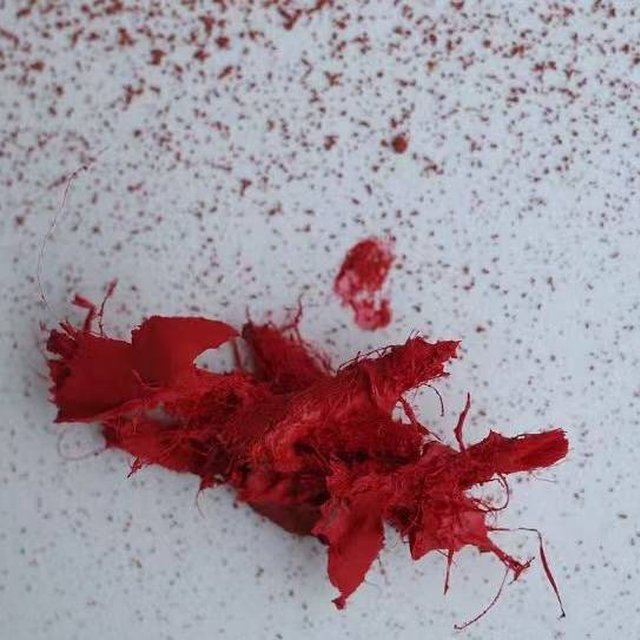
During the development of the project, the curator's attention shifted beyond the completed paintings towards the artistic processes and material remains that preceded them. Before turning to oil painting, Han experimented with yarn and thread under the same conceptual framework. These textile experiments were originally considered unsuccessful by the artist and were never intended for exhibition.
Their reappearance within the project offers one possible interpretation emerging from the dialogue between artist and curator. Rather than being understood simply as failed experiments, they may also be seen as material traces through which artistic thinking and affect continue to survive. This raises broader questions: should these experiments be regarded as autonomous works in their own right or merely disposable residues of artistic practice? Likewise, are difficult emotions themselves integral dimensions of human experience that deserve recognition, or are they simply transitional states to be overcome and forgotten?
Across the project, completed paintings, archival materials and experimental works are presented not as separate categories but as interconnected stages within an ongoing artistic process. The boundary between artwork and archive, completion and process, artistic production and curatorial interpretation is deliberately left open.
The project unfolds across two exhibitions and culminates in a participatory installation. The exhibition at Goldsmiths marks the first chapter of the project. At the conclusion of the second exhibition, visitors will be invited to participate in dismantling the exhibited works. Their fragments will be reassembled into a new installation, allowing destruction to become another form of creation and extending the dialogue beyond the project itself.